
The Little Beaks story
A bit about us
Little Beaks is a registered non-profit sanctuary and advocacy organisation for small companion birds, based in Perth, Western Australia.
The sanctuary is home to hundreds of birds across multiple purpose-built aviaries:
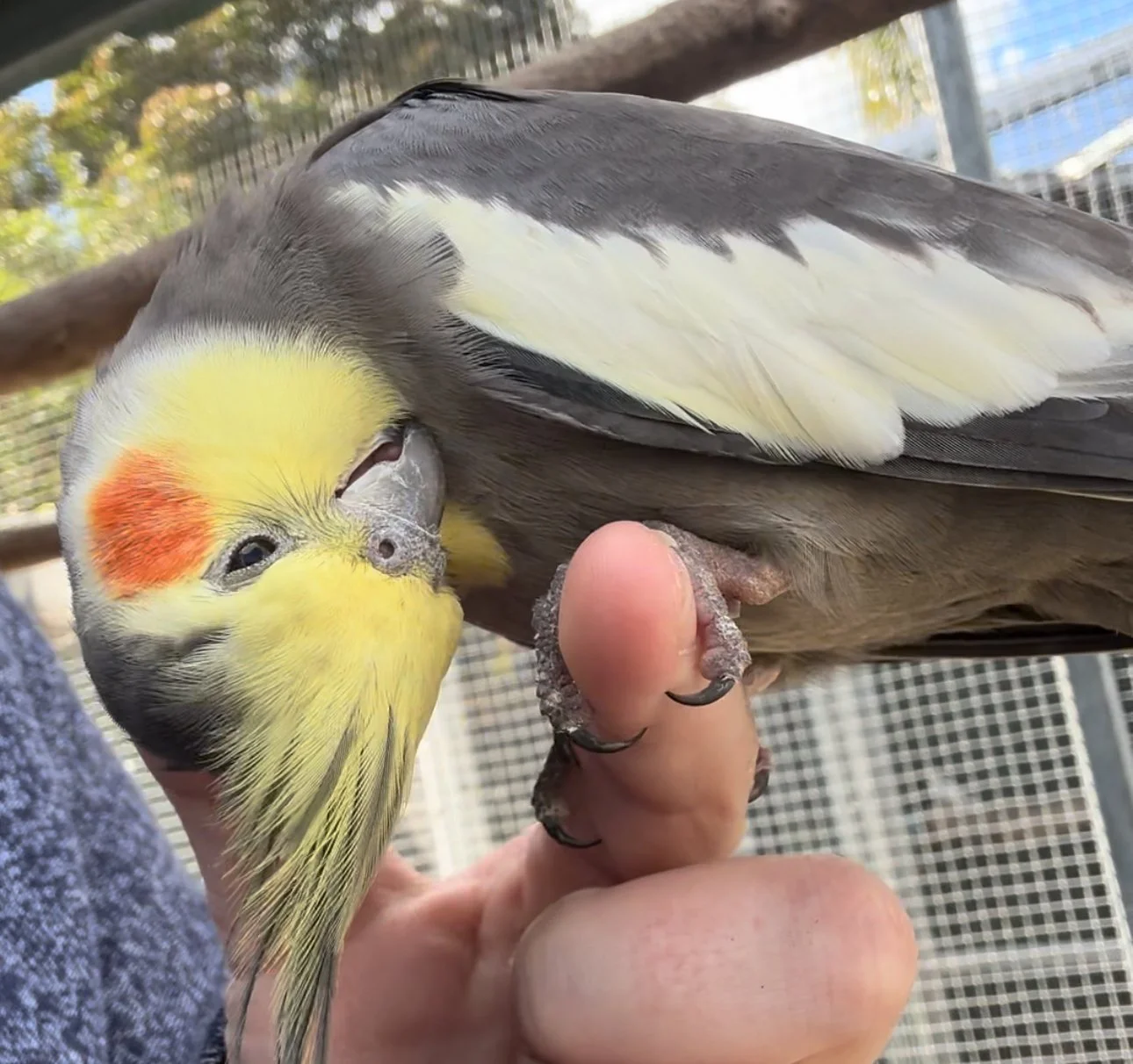
Two dedicated parrot aviaries, housing budgies, weiros/cockatiels, plumhead parrots, and kākāriki
A separate specially-designed space for special needs budgies
Two enclosures for finches, canaries, and doves
A separate space solely for lovebirds
The birds range in age from adolescent to elderly. Many are living with physical disabilities, and/or psychological trauma from past treatment.
We provide lifelong care and do not adopt out birds.
How it started
Our founder, Fiona, has always had a deep love of all animals, and grew up with budgies. After coming across a YouTube video one day about the tragic life of a rescued budgie, it became a mission to find a bird that needed help.
The more she learned about budgies, the more she realised how many issues there were with misinformation and outdated ideas.
One rescued budgie turned into a pair, which quickly turned into a small flock living indoors.
Awareness of bird health led to the first aviary being purchased, which lived in the backyard while Fiona was still living with her parents.
Not content with how things were, and concerned for the many other companion birds likely enduring neglect or mistreatment (often unintended, due to misinformation), Fiona created a post for Gumtree, ‘Please read: Basic care for small pet birds’ hoping to reach at least a few people and their birds.
This had mixed response, but largely positive, with a number of people responding saying they hadn’t been aware, and would put some of it into practice.
At the same time, with aviary space available, Fiona continued searching Gumtree for birds looking like they needed care.
At some point during this, Fiona was contacted on Gumtree by a fellow bird lover, Erika, who had found a budgie in a pet store, in an obviously bad way, and was reaching out for help. We got that budgie to an avian vet.
This marked the beginning of a friendship founded on a passion for bird welfare, and the creation of the original Little Beaks; a group that was focused on education and helping people to rehome their birds safely.
While that version of Little Beaks closed after a year or so, due to busy lives and personal circumstances, that friendship continued, with Erika remaining dedicated to bird welfare, with her own rescue flock (including special needs), and Fiona establishing the current rescue and advocacy organisation.
What we stand for
Little Beaks exists for two reasons:
To advocate for systemic change in how pet birds are viewed, sold, and cared for
To provide lifelong sanctuary for the most vulnerable small companion birds
Our aviaries are designed to allow birds to be birds.
We prioritise:
Flight and freedom of movement (no wing clipping)
Flock companionship and social bonding
Species-appropriate environments
Natural light, fresh air, and enrichment
Ongoing medical and supportive care
We do not breed. Our aviaries contain no nest boxes or designated nesting areas. On rare occasions, a determined finch pair proves how resourceful nature can be, but breeding is never intentional or encouraged.
We speak openly about welfare issues, including poor breeding practices, inadequate housing standards, preventable medical neglect, and the cultural normalisation of disposable ‘starter pets’. We advocate for stronger legal protections and better public understanding of small companion birds.
How we’re funded
Little Beaks is self-funded, and supported by amazing contributors who believe that small birds deserve better.
Community contributions have helped us:
Build and maintain our aviaries
Fund complex veterinary care and surgeries
Provide specialised diets and enrichment
Support intensive and palliative care when needed
If you’d like to help, you can visit our Support page to learn more.